 Chinese


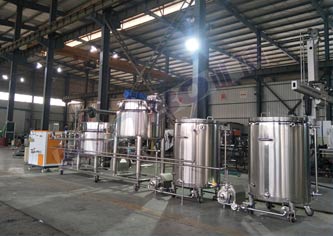
Steam-Water Separator
Product Details
Steam-Water Separator
The steam-water separator is a pressure vessel made of carbon steel or stainless steel, with flanged connections DN16/DN25/DN40. It must be installed on a horizontal pipeline with the drainage outlet facing downward. All sizes include a mounting bracket to reduce pipeline load. To ensure rapid discharge of separated liquid, a suitable set of drain valves should be connected to the bottom outlet of the separator.
(1) Product Overview
Also known as gas-water separator, gas-liquid separator, or oil-water separator, the steam-water separator is mainly used to remove water and oil from compressed air, steam, methane, and other media. Our company manufactures steam-water separators, baffle filters, purification equipment, and oil-water/gas separators, widely applied in boiler systems, urban heating, air compressor water removal, refrigerated air dryers, and other equipment for gas-liquid separation.
(2) Product Features
1. High water removal efficiency: can remove 99% of liquid water and oil;
2. Compact size and lightweight;
3. Easy installation with pipeline connection; can be mounted hanging;
4. Maintenance-free and highly reliable;
5. Designed for rated pressures of 1.6–2.5 MPa, safe and reliable.
(3) Working Principle
The air steam-water separator combines centrifugal and collection principles with gravity and collision mechanisms to effectively remove liquid water droplets from compressed air. The separator uses sudden changes in steam flow direction to separate suspended water droplets from the steam, providing high-dryness steam to downstream equipment, improving thermal efficiency, and preventing water hammer. Condensate is discharged through drain valves at the bottom. Drain devices can be automatic or manual ball valves.
(4) Selection Considerations
1. Inlet and outlet diameter: should generally not be smaller than the pump inlet, usually matching the pipe diameter.
2. Nominal pressure: select based on the maximum pressure in the filtration system.
3. Mesh selection: based on particle size to be intercepted according to the process requirements; refer to the filter mesh specifications table.
4. Material: generally matches the connected pipeline material; for different service conditions, options include cast iron, carbon steel, low-alloy steel, or stainless steel.
5. Pressure loss calculation: for water filters, at rated flow rate, the pressure drop is typically 0.5–1.2 kPa.
